
The difference in landing page vs website is purpose: a landing page is a single page built to make one kind of visitor take one action, while a website is a set of pages that presents a whole business to many audiences and supports many tasks. Choose a landing page when you have one offer, one audience and one goal, such as a launch, a campaign or a waiting list; choose a website when people need to compare services, trust the company, find information and come back. This guide compares the two, shows when each fits, explains how they work together and how to move from one to the other.
Last updated: 12 November 2026.
What is the difference between a landing page and a website?
A landing page is a standalone page with one goal. Visitors usually arrive from a specific source, such as an advert, an email or a social post, and the page gives them exactly what that source promised, followed by one clear call to action: buy, book, sign up or ask for a quote. Navigation is minimal or absent, so attention stays on the action.
A website is a structured set of pages: home, services or products, about, case studies, articles, contact and legal pages. It serves many visitors with different questions, builds trust over time, and is the main place where search engines and AI assistants learn what a company does.
At Odduel, a creative and technology agency in Barcelona and São Paulo, we build both in our website development service, and often the right answer is a website with focused landing pages inside it.
In short: a landing page wins for one offer, one audience and one action over a limited time; a website wins for a business with several services, audiences or markets and a long-term presence in search. Most growing companies end up with both: a website as the base and landing pages for campaigns.
Landing page vs website: how do they compare?
| Criterion | Landing page | Website |
|---|---|---|
| Purpose | One action from one audience | Present the whole business, many tasks |
| Structure | One page, little or no navigation | Many pages, menus, internal links |
| Traffic source | Mostly paid ads, email, social, QR codes | Search, direct visits, referrals and campaigns |
| Search visibility | Limited: one page targets few queries | Broad: many pages target many queries |
| Trust building | Focused proof for one offer | Depth: team, work, articles, policies |
| Time to launch | Short | Longer, depending on pages and features |
| Upkeep | Low, often temporary | Ongoing content and maintenance |
| Measurement | Simple: one conversion | Several goals and journeys |
When should a business choose a landing page over a website?
A landing page is the better choice in these situations:
- A product or event launch where the message is a single promise and a date.
- A paid campaign where every visitor arrives with the same intent from the same advert.
- Testing an idea before investing in a full site: one page, one offer, a sign-up form.
- A waiting list or pre-order for something not yet available.
- A single service with a clear action, such as booking a consultation.
- A seasonal offer that will end, where a temporary page is cleaner than adding to the main site.
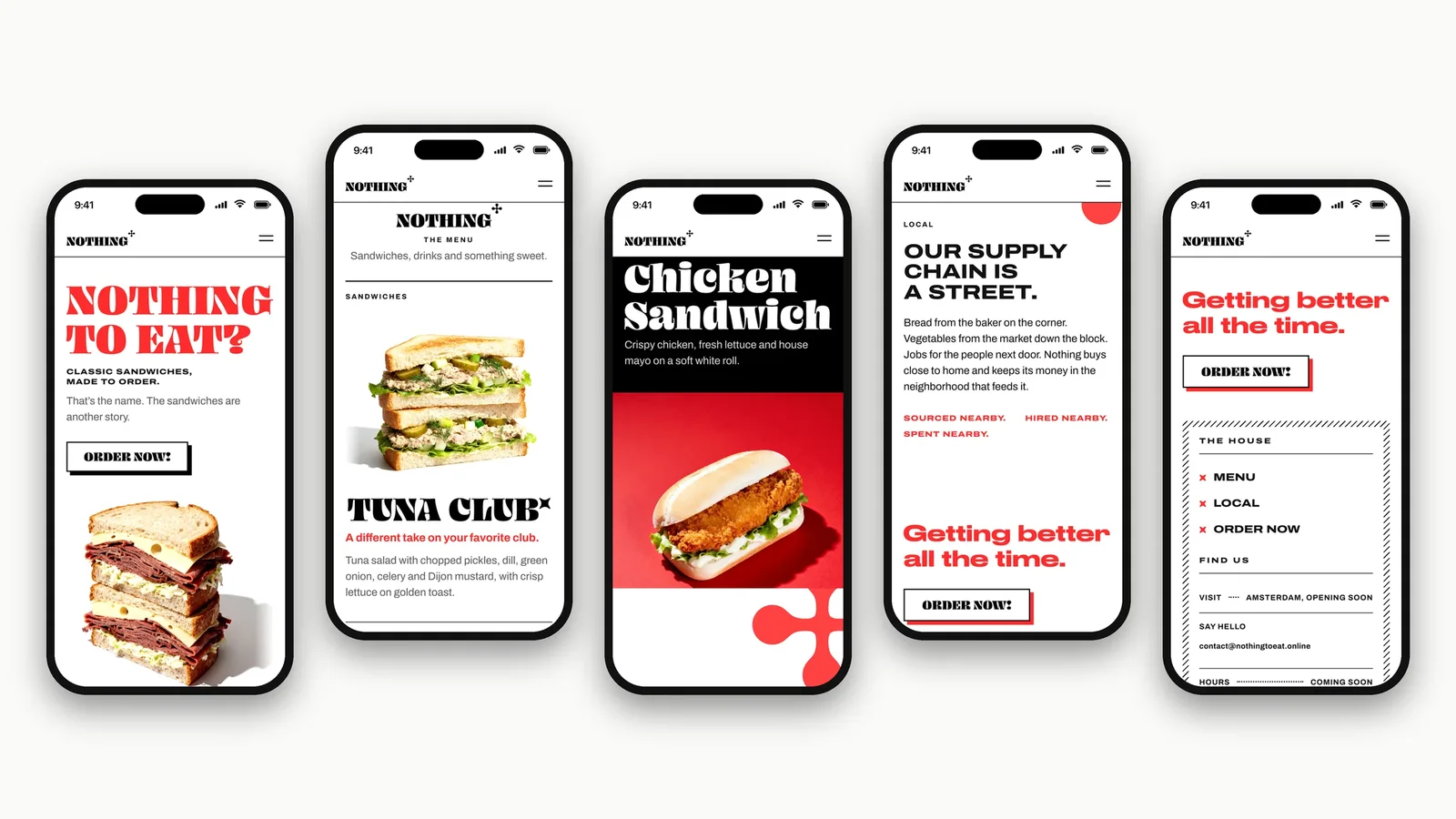
Our work for Nothing To Eat is a good example of a single-page site carrying a whole brand: the identity, the story, the menu and the pattern-led design on one scrolling page. You can see it in the Nothing To Eat case study.
When do you need a full website?
A website becomes necessary when any of these apply:
- Several services or product lines, each with its own audience and questions.
- Long buying cycles, where clients read, compare and come back several times.
- Search visibility matters, because one page cannot answer the many questions people search for.
- Several countries or languages, each needing its own pages and addresses.
- Trust is decisive: professional services, B2B sales, healthcare, finance and anything with a high price.
- Recruitment, press or investors need their own information.
- Content marketing is part of the plan, with articles, guides and case studies.
What are the pros and cons of each?
Landing page
- Pros: fast to build, low cost to run, easy to measure, strong focus on one action, simple to test variations.
- Cons: limited search visibility, little room for depth and trust, not suited to several audiences, often temporary.
Website
- Pros: a lasting home for the brand, many entry points from search, room for proof and detail, supports many goals and markets.
- Cons: takes longer to plan and build, needs regular content and maintenance, and each page needs a clear purpose or the site becomes diluted.
Our guide on landing page design cost explains what shapes the budget of a single page, and how long it takes to build a website sets out the phases of a full site.
How do landing pages and websites work together?
For most businesses the question is not either-or. A website provides the base: credibility, search visibility and a full explanation of what you do. Landing pages sit on top, each tuned to one campaign or audience.
A practical set-up looks like this:
- The website covers the company, every service, proof of work, articles and contact.
- Campaign landing pages live on the same domain, often at addresses such as `/offer/` or `/lp/`, kept out of the menu.
- Each landing page matches its advert or email word for word, with one call to action.
- Landing pages that keep performing can be turned into permanent service pages and linked from the menu.
- Pages that have done their job are removed or redirected, so they do not compete with the main pages in search.
Keeping landing pages on your main domain also means they share its design system, analytics, consent banner and technical quality, and any links they earn help the whole site.
What makes either one work?
The same fundamentals apply to both:
- A clear first screen that says what you offer and for whom, in words the visitor uses.
- Speed, especially on phones; Google’s guidance on Core Web Vitals explains the measures that matter.
- Proof: real work, real reviews and real details, never invented numbers.
- One primary action per page, visible without hunting.
- Accessible design, with readable text, good contrast and working keyboard navigation.
- Honest consent and tracking, with trackers loaded only after consent, as GDPR rules require.
Measure each format against its own goal. A landing page has one number that matters: the share of visitors who take the action. A website needs a few goals, such as enquiries, bookings or newsletter sign-ups, plus a view of which pages bring people in and which pages they read before contacting you. Agree these goals before launch, so the first weeks of data answer real questions.
For search, Google’s SEO starter guide is a sound reference whichever format you choose.
Can you move from one to the other later?
Yes, and planning for it saves work. A landing page can grow into a website if it is built on a platform that supports more pages, uses a reusable design system and sits on the domain you intend to keep. When the site arrives, the landing page’s address can stay as a page within it, or be redirected with a permanent 301 redirect to the closest new page, keeping whatever links and visibility it has earned.
Moving the other way also happens: a company may simplify an outdated, sprawling website into a focused one-page site while it rethinks its offer. In that case, redirect old addresses carefully so visitors and search engines are not sent to dead pages.
Whichever direction you take, start with a short website brief: it forces the decision on audiences, goals and content before anything is designed.
Questions people ask
What is the difference between a landing page and a website?
A landing page is one page designed to get one audience to take one action, usually reached from an advert, email or social post. A website is a set of pages that presents a whole business, serves many audiences and tasks, builds trust over time and gathers visibility in search engines.
Is a landing page enough for a small business?
It can be at the start, if you have one main service, one audience and a simple action such as booking or ordering. As you add services, markets or content, or need to rank for more searches, a website becomes necessary. Building the landing page on a platform that can grow keeps that step easy.
Are landing pages good for SEO?
A single page can rank for a small group of closely related searches, but it cannot cover the many questions people search for. Campaign landing pages are often kept out of search entirely. For lasting search visibility, a website with dedicated pages for each service and topic performs better.
Should landing pages be on the main website domain?
Usually yes. Pages on your main domain share its design, analytics, consent set-up and reputation, and any links they earn strengthen the whole site. Separate domains make sense only in specific cases, such as a distinct product brand or a joint campaign with a partner that needs its own address.
Can a landing page become a website later?
Yes. Build it on a platform that supports more pages, use a reusable design system and launch it on the domain you plan to keep. When the full site is ready, keep the page as part of it or redirect its address to the closest new page with a permanent redirect.
Write down your audiences, your offers and the one action you want from each: if there is only one of each, start with a landing page; if there are several, plan a website. Either way, see our website development service or tell us what you need.