A creative agency in Europe is a studio that shapes how a company looks, sounds and shows up: brand identity, campaigns, content, websites and the ideas that tie them together, delivered for clients across one or several European markets. Choosing one well comes down to three things: work that proves they can solve a problem like yours, a clear process with named people, and terms that leave you owning what you pay for. This guide explains what a creative agency does, how to compare agencies, the questions to ask before signing and what small and medium-sized companies should look for.
Last updated: 12 November 2026.
What does a creative agency do?
A creative agency turns business goals into ideas and assets people notice and remember. Where a consultancy writes the strategy and a production company makes the film, a creative agency connects the two: it finds the idea, designs how it looks and makes sure it works across every place the audience meets the brand.
The core services usually fall into five groups:
- Strategy: research, positioning, audience definition and the brief for everything that follows.
- Brand identity: name support, logo, typography, colour, tone of voice and guidelines.
- Campaigns and content: concepts, copy, photography, video, social media and advertising.
- Digital: websites, online stores, landing pages and interactive experiences.
- Brand rollout: packaging, signage, presentations, merchandise and templates.
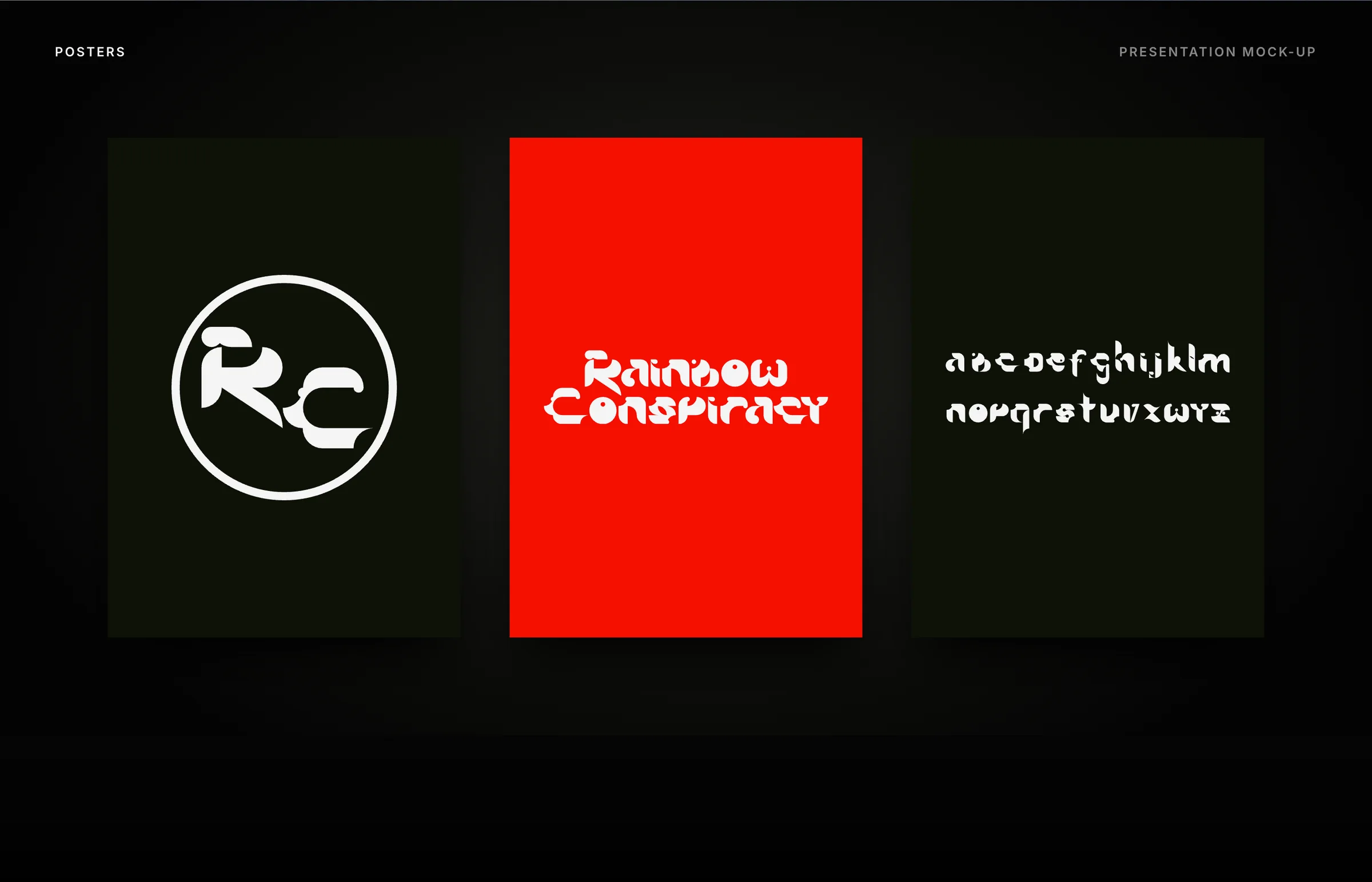
Odduel, a creative and technology agency in Barcelona and São Paulo, works across these groups, from identity in our branding service to websites and apps. You can see how a full identity unfolds in our work for Rainbow Conspiracy.
In short: look at work that solved real problems, not just pretty images; meet the people who will do the work; ask how they run a project and measure it; read the contract for ownership and exit terms; and start with a defined first project before a long retainer.
What types of creative agency are there?
“Creative agency” covers very different businesses. Knowing the type helps you compare like with like.
| Type | Focus | Good fit when | Watch for |
|---|---|---|---|
| Branding studio | Identity, naming, guidelines | You need a new or refreshed brand | May hand off digital build to others |
| Advertising agency | Campaigns, media, big ideas | You run recurring paid campaigns | Retainers sized for large budgets |
| Content studio | Social, photo, video production | You need a steady flow of content | Less strategic depth |
| Digital agency | Websites, apps, online stores | Your main channel is digital | Brand thinking can be thin |
| Creative and technology agency | Brand, content and digital build together | You want ideas and products delivered by the same partner | Check depth in each discipline |
If your project leans heavily on code, our guides to a technology agency in Europe and a branding agency in Europe look at those specialisms more closely.
Why work with a creative agency in Europe?
Working with a creative agency in Europe brings practical advantages beyond time zones. European clients often sell in several countries at once, and good agencies plan for that from the start: identities that work in different scripts and word lengths, campaigns adapted to local culture rather than simply translated, and websites built for several languages and currencies.
There are legal advantages too. An agency used to European rules will design consent banners, forms and data flows in line with the GDPR, consider accessibility requirements, and know how to protect trade marks in the EU through the European Union Intellectual Property Office. These are not extras: they affect how the work is designed.
How do you choose a creative agency in Europe?
Follow a short, structured process. It saves time on both sides.
- Write a one-page brief. State the business goal, the audience, what success looks like, the timeline and the budget range you are working to.
- Make a shortlist of three to five. Use portfolios, recommendations and directories, and favour agencies with work in your sector or at your scale.
- Read the case studies, not just the pictures. Look for the problem, the thinking and what changed for the client, where they share it.
- Meet the people who will do the work. Ask who leads the project day to day and who designs, writes and builds.
- Ask for an approach, not free spec work. A short written response to your brief shows how they think without asking anyone to work unpaid.
- Compare proposals on the same basis: scope, deliverables, number of revision rounds, timeline, team and terms.
- Check references. Speak to one or two past clients about process, communication and how problems were handled.
- Start with a defined project. A first piece of work with a clear end shows how the relationship works before a longer commitment.
Which questions should you ask before signing?
These questions reveal more than any presentation:
- Who exactly will work on our project, and what share of their time?
- What does your process look like, step by step, and where do we approve?
- How many rounds of changes are included, and what happens after that?
- How will you measure whether the work succeeds?
- Who owns the final files, source files and rights to the work, and when does ownership pass to us?
- Which fonts, photographs and music are licensed, for how long and for which uses?
- What do you subcontract, and to whom?
- How do we end the agreement if it is not working, and what do we receive?
- How do you handle personal data we share with you?
Clear, specific answers are a good sign. Vague answers about “the team” and “our magic” are not.
What should small and medium-sized companies look for?
For a small or medium-sized company, as the European Commission’s SME definition describes most European businesses, the best creative agency is rarely the largest. Look for:
- Direct access to the people doing the work, not only to an account manager.
- Work at your scale, so the agency knows how to do a lot with a focused budget.
- Phased plans: identity first, then the website, then content, rather than everything at once.
- Assets you can use yourselves, such as templates, guidelines and an editable website.
- Transparent pricing in the proposal, with what is included and what is not.
A good agency will also tell you when you do not need something yet.
How do creative agencies charge?
Most creative agencies use one of three pricing models, and many combine them:
- Fixed project fee: a set price for a defined scope, such as an identity or a website. It suits work with a clear end and makes budgeting simple, provided the scope is written down precisely.
- Retainer: a monthly fee for an agreed amount of work or availability. It suits continuous needs such as content, campaigns or ongoing design support.
- Time and materials: days or hours used, reported regularly. It suits exploratory work where the scope will change as you learn.
Whatever the model, a proposal should list deliverables, revision rounds, what is excluded and how extra work is quoted. If your project is mostly a website or an online store, our guide to choosing a web development agency in Europe covers the questions specific to digital builds.
What are the warning signs?
Walk away, or ask harder questions, when you see these:
- A portfolio of beautiful pictures with no explanation of the problem solved.
- Pressure to sign a long retainer before any project has been delivered.
- No clear answer on who owns the work.
- Free pitch work demanded or offered as standard.
- A proposal that is mostly about the agency, with little about your business.
- Promises of results nobody can guarantee, such as a fixed number of followers or sales.
How do you get the best from a creative agency?
The client’s part matters as much as the agency’s. Share real information: numbers, customer feedback and past attempts that did not work. Name one decision-maker who can approve. Give feedback on the goal, not on personal taste (“the audience may read this as expensive” rather than “I don’t like green”). Keep to agreed rounds and dates. And judge the work against the brief you agreed, not against something new that appeared halfway through.
Questions people ask
What does a creative agency do?
A creative agency turns business goals into ideas and assets: strategy and positioning, brand identity, campaigns, content such as photography and video, websites and online stores, and the rollout of a brand across packaging, signage and social media. It connects the idea with how it looks and works in every place customers meet the brand.
How do you choose a creative agency in Europe?
Write a short brief, shortlist three to five agencies with relevant work, read their case studies, meet the people who would do the work, compare proposals on scope, rounds, timeline and terms, check references, and start with a defined first project before committing to a longer retainer.
What is the difference between a creative agency and a digital agency?
A creative agency focuses on the idea, the brand and how it is expressed across channels. A digital agency focuses on building websites, apps and online stores and on digital marketing. Many agencies now combine both; ask how deep each discipline goes and who does the work.
Should we own the work an agency creates for us?
Yes, in most cases. The contract should transfer ownership of the final work and source files once paid, and state clearly which licensed elements, such as fonts, stock photography or music, remain under third-party licences, for which uses and how long. Ask this before signing, not at the end.
Is a creative agency worth it for a small business?
It can be, when the scope is focused. A small business gains most from a strong identity, a clear website and templates it can use itself. Choose an agency that works at your scale, gives direct access to the people doing the work and plans in phases rather than selling everything at once.
Write your one-page brief first: goal, audience, success, timeline and budget range. It makes every conversation with an agency sharper. If you are looking for a creative partner for your brand and the products around it, see our branding service or tell us about your project.