A brand platform is the short, agreed document that defines what a brand stands for: its purpose, the audience it serves, its positioning against alternatives, its promise, its personality and the core messages that follow from them. It sits upstream of the logo, the website and every campaign, so that designers, writers, sales teams and partners make consistent decisions without asking. This guide explains what a brand platform contains, when a business needs one, how to build it step by step, a template you can copy and how it differs from brand guidelines.
Last updated: 20 November 2026.
What is a brand platform?
A brand platform is the strategic foundation of a brand, written down in a few pages. It answers the questions every piece of communication eventually depends on: why the company exists, for whom, what makes it the better choice, what it promises and how it should sound.
The term is used widely in French-speaking markets as “plateforme de marque”, and the same idea appears elsewhere as a brand strategy, brand book or brand foundation. Names vary; the content is broadly the same.
A brand platform is not a visual identity. It contains no logo files or colour codes. Instead, it is the brief the identity answers, and the reference the identity is judged against.
At Odduel, a creative and technology agency in Barcelona and São Paulo, the brand platform is the first deliverable of most projects in our branding service, agreed before any design begins.
In short: a brand platform states purpose, audience, positioning, promise, values, personality and key messages on a few pages. It is built from research and workshops, agreed by leadership, and then used to brief the identity, the website, campaigns and hiring.
What does a brand platform contain?
Most brand platforms include the same core elements. The table shows each one, the question it answers and an illustrative example for an imaginary company.
| Element | Question it answers | Illustrative example (fictional bakery chain) |
|---|---|---|
| Purpose | Why do we exist beyond making money? | To make good bread an everyday habit, not a luxury |
| Vision | What future are we working towards? | A proper bakery within a short walk of every home in the region |
| Mission | What do we do every day to get there? | Bake by hand each morning, at prices people can return to daily |
| Audience | Who are we for, specifically? | Working families and commuters who value quality but lack time |
| Positioning | Why us rather than the alternatives? | Craft quality at supermarket convenience |
| Promise | What can customers always count on? | Bread baked today, every day |
| Values | Which principles guide our choices? | Craft, honesty, neighbourliness |
| Personality | If the brand were a person, how would it behave? | Warm, straightforward, quietly proud |
| Tone of voice | How do we sound in words? | Plain, friendly, never precious |
| Key messages | What do we want people to remember? | Fresh daily; made by hand; priced for every day |
| Proof points | What evidence supports our claims? | Visible bakers, morning baking times, ingredient sourcing |
Some platforms add a brand story, a name rationale, a brand architecture for companies with several products, or a short manifesto. Keep only what will actually be used.
When does a business need a brand platform?
A brand platform earns its place whenever several people must make brand decisions without checking with the founder. Common moments:
- Launching a new company or product, before the name, identity and website are designed.
- Rebranding, when the business has changed and the old identity no longer fits.
- Growth, when new hires, agencies and partners join and messages start to drift.
- Entering new markets, where the brand must be adapted to other languages and cultures without losing itself.
- Mergers and acquisitions, when two brands must be combined or arranged under a parent.
- Before a major campaign or website, to make sure the brief rests on agreed foundations.
For a small business with a founder who writes everything, a one-page version is enough. For a company with several teams and markets, the full platform pays back quickly.
How do you build a brand platform step by step?
- Gather what exists. Collect the business plan, past campaigns, sales materials, reviews and any earlier brand work.
- Interview stakeholders. Speak to founders, leaders, sales and customer-facing staff about what the company does best and where it is heading.
- Listen to customers. Interviews, reviews and support conversations show what people value and the words they use.
- Map the competition. Look at how alternatives present themselves, to find a position that is both true and distinct.
- Run a workshop. Bring decision-makers together to agree purpose, audience, positioning and values, using the research as evidence.
- Draft the platform. Write each element in plain language, short enough to remember.
- Test it. Check drafts with staff and a few customers. Does it sound true? Does it help choose between two options?
- Agree and sign off. Leadership approves the final version, so it carries authority.
- Put it to work. Use it to brief the identity, website, campaigns, recruitment and training.
Positioning is usually the hardest part; our article on brand positioning goes deeper into finding a position you can own.
Brand platform template
Copy this structure into a document and fill each section in a few sentences. Shorter is better: if a section cannot be said briefly, it is not yet clear.
- Purpose: one sentence on why the company exists beyond profit.
- Vision: one sentence on the future you are working towards.
- Mission: one or two sentences on what you do every day.
- Audience: a short description of your main customer groups, with their needs and frustrations.
- Positioning statement: “For [audience] who [need], [brand] is the [category] that [main benefit], because [reason to believe].”
- Promise: what customers can always count on, in one line.
- Values: three to five values, each with one sentence on what it means in practice and what it rules out.
- Personality: three to five traits, each with a short “this, not that” pair, such as “confident, not arrogant”.
- Tone of voice: how the brand writes, with a few examples of sentences that sound right and wrong.
- Key messages: three to five messages, each with its proof points.
- Brand story: a short paragraph on where the brand comes from and why it matters.
What are real examples of a brand platform?
Most companies keep their full brand platform internal, but parts of it are visible in public. A company’s purpose statement on its “about” page, a positioning line in its advertising, or the consistent tone of its customer emails are the platform at work.
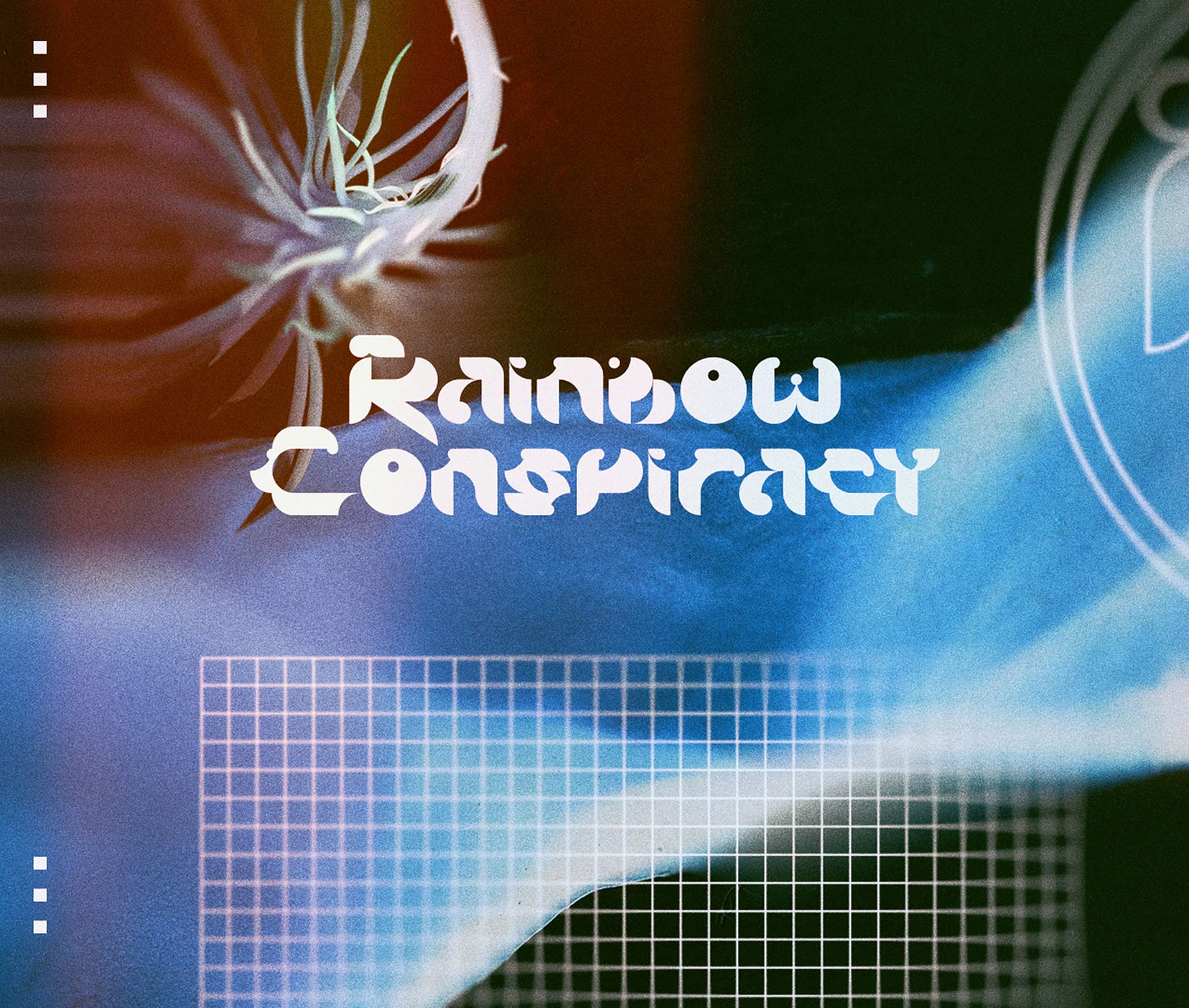
In our own work, the identity always answers a clear idea of the brand. For Rainbow Conspiracy, the identity system, from the wordmark to the colours of light, is recorded in a brand guide that explains how each part is applied; a shared idea of the brand is what makes those parts feel related.
When you look at strong brands, ask which decisions their platform made easy: what they never say, which audiences they ignore, which promise they repeat. That is often more revealing than the slogan.
How is a brand platform different from brand guidelines?
The two are often confused, but they do different jobs.
| Aspect | Brand platform | Brand guidelines |
|---|---|---|
| Purpose | Defines what the brand stands for | Defines how the brand looks and sounds in use |
| Content | Purpose, audience, positioning, values, personality, messages | Logo, colours, typography, imagery, layouts, tone examples |
| Made | Before the identity | After the identity |
| Main users | Leadership, strategists, agencies, writers | Designers, marketers, partners, suppliers |
| Changes | Rarely, with strategy | When the identity evolves or new uses arise |
The platform is the “why” and “what”; the guidelines are the “how”. Our guide to brand guidelines covers the second document in detail, and a brand manifesto can turn the platform’s purpose into a public statement.
What are the benefits of a brand platform?
- Consistency: everyone describes the company the same way, across channels and countries.
- Faster decisions: briefs, copy and designs can be judged against agreed criteria rather than personal taste.
- Better briefs: agencies and freelancers start from a clear foundation, which shortens projects.
- Stronger hiring: values and purpose help attract people who fit and explain the culture to new joiners.
- Protection of the name and mark: a clear platform helps choose a distinctive name and identity, which are easier to protect; the EUIPO handles EU trade mark registration across member states.
What are the most common mistakes?
- Writing what sounds good instead of what is true. Customers notice the gap quickly.
- Generic values. “Quality, innovation, integrity” could belong to anyone; each value needs a practical meaning and something it rules out.
- Too long to remember. A platform nobody can recall does not guide decisions.
- Made by one department. Without leadership agreement, the platform lacks authority.
- Filed and forgotten. It must be used in briefs, onboarding and reviews, and revisited when strategy changes.
Questions people ask
What is a brand platform?
A brand platform is a short strategic document that defines what a brand stands for: its purpose, vision, mission, audience, positioning, promise, values, personality, tone of voice and key messages. It is agreed by leadership before the visual identity is designed and then used to brief the identity, website, campaigns and recruitment, so decisions stay consistent.
When does a business need a brand platform?
A business needs one when several people make brand decisions without the founder: at launch, during a rebrand, during fast growth, when entering new markets, after a merger, or before a major website or campaign. A small business can start with a one-page version and expand it as the company and its teams grow.
What is the difference between a brand platform and brand guidelines?
A brand platform defines what the brand stands for, including purpose, audience, positioning, values and messages, and comes before the identity. Brand guidelines define how the brand looks and sounds in use, including logo, colours, typography and imagery, and come after the identity. The platform is the why; guidelines are the how.
How long does it take to create a brand platform?
For a small or mid-sized company, a brand platform usually takes a few weeks: research and interviews, a workshop with decision-makers, drafting, testing with staff and customers, and sign-off. Larger organisations with several markets or brands take longer, mainly because more people need to be heard and agree.
What should a brand platform template include?
A practical template includes purpose, vision, mission, audience, a positioning statement, the brand promise, three to five values with practical meanings, personality traits with “this, not that” pairs, tone of voice examples, key messages with proof points and a short brand story. Each section should fit in a few sentences.
Try writing your purpose, audience and positioning statement in one sentence each this week; where you struggle shows where the work is. When you want a platform built from research and turned into an identity, see our branding service or tell us about your brand.